
Close
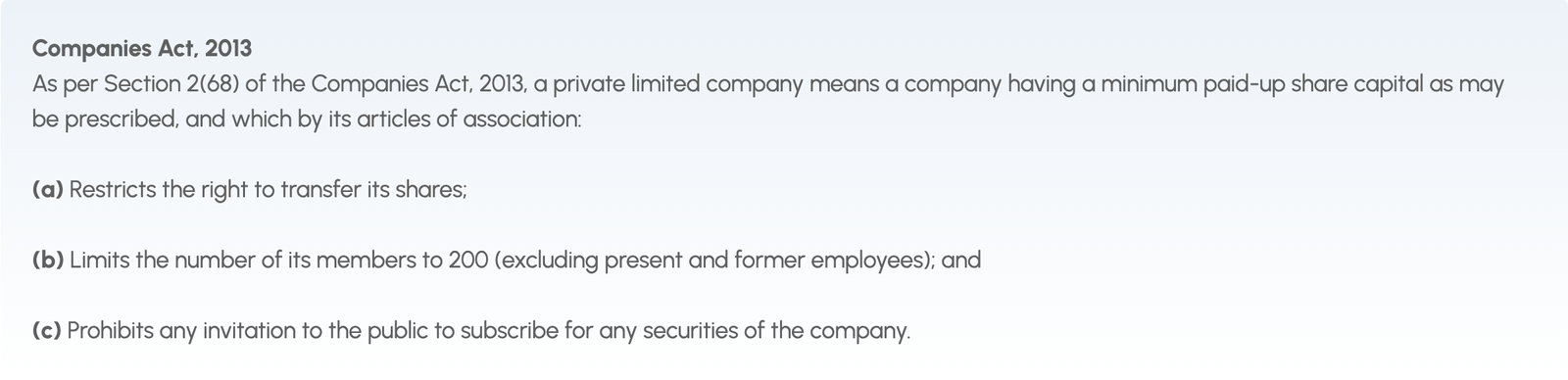
A private limited company stands out among various business structures in India due to its separate legal entity status, limited liability protection, and formal company registration process under the Companies Act, 2013, regulated by the Ministry of Corporate Affairs (MCA).

A private limited company (Pvt Ltd) is a separate legal entity registered under the Companies Act, 2013, offering limited liability protection to its members. It restricts share transfers, requires a registered office address, and is ideal for startups and SMEs seeking credibility, funding, and control.
Private Limited Company registration in India is one of the most preferred business structures for startups and growing businesses, as it offers limited liability protection, a separate legal identity, and various tax advantages. This type of company is regulated under the Companies Act, 2013, and the registration process requires essentials such as Digital Signature Certificate (DSC), Director Identification Number (DIN), and valid identity and address proof of the directors and shareholders. Through the SPICe+ form, multiple registrations including company name approval, incorporation, PAN, TAN, and GST can be applied for in a single integrated process. Once the Registrar of Companies (RoC) approves the application, the company receives its Certificate of Incorporation, which legally authorises it to start operations, hold assets, and enter into agreements. After incorporation, the company must fulfil certain compliance requirements, including filing annual returns and maintaining proper financial records.
At ComplyHub, we simplify the entire Private Limited Company registration journey by managing everything from documentation and filing to final approval. Our team ensures that each step is completed smoothly, correctly, and without unnecessary delays. We believe in complete clarity and professional support, so you always know what is happening at every stage, with straightforward pricing and no hidden charges. Our goal is to help you start your business on a strong and compliant foundation.
Advantages
1. Limited liability of shareholders
2. Separate legal entity from owners
3. Easy to raise funds from investors
4. Perpetual succession (business continues despite change in ownership)
5. Higher credibility and professional image
6. Easy transfer of ownership through shares
7. Better tax planning opportunities
1. Higher compliance and legal requirements
2. Costly formation and maintenance
3. Restrictions on transfer of shares
4. Limited number of shareholders (maximum 200)
5. Less privacy due to public disclosures
6. Slower decision-making due to formal procedures
7. Complex and time-consuming closure process
Choose a unique company name. We verify its availability with the MCA and conduct a basic trademark check to avoid conflicts.
We help directors obtain their Digital Signature Certificates required for online filings.
We draft the Memorandum and Articles of Association, defining your business objectives and internal governance structure.
We file the SPICe+ form with the MCA, including DIN, PAN, and TAN allotment for your company.
Receive the Certificate of Incorporation along with CIN, officially registering your company.
We assist with bank account opening, GST registration, auditor appointment, and ongoing compliance requirements.
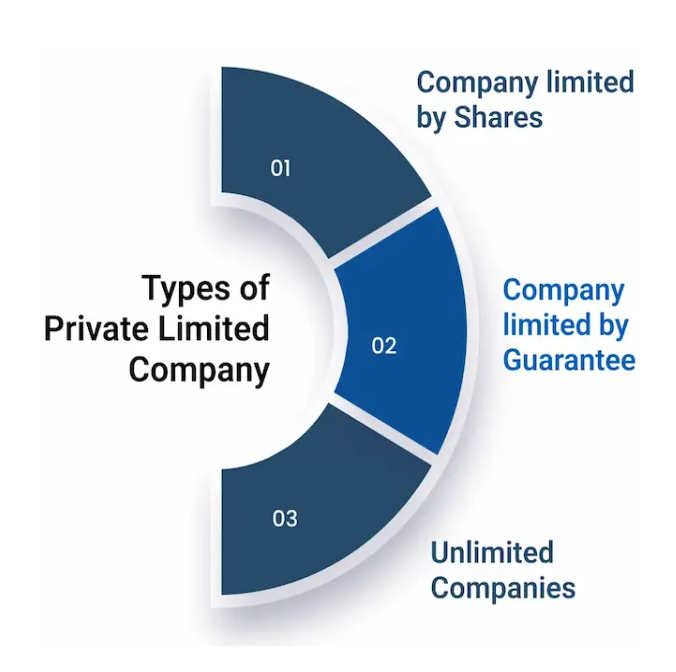
Selecting the appropriate type of Private Limited Company is an important decision, as it directly impacts the owners’ liability, financial structure, and overall business flexibility. In India, private companies are mainly classified based on how members’ liability is defined and how the company is structured financially. The three primary categories are explained below:
Company Limited by Shares
This is the most common form of Private Limited Company in India. In this structure, the responsibility of each shareholder is limited only to the unpaid amount on the shares they hold. Their personal assets remain protected, even if the company faces losses. This model is highly suitable for startups and growing businesses that plan to bring in co-founders or private investors, as ownership can be easily divided through shares without exposing anyone to unlimited personal risk.
Company Limited by Guarantee
In this type of company, there is no share capital. Instead, members agree in advance to contribute a fixed amount if the company is ever wound up. Such companies are usually formed for non-profit objectives, including charitable organisations, associations, clubs, and foundations. It provides a proper legal structure while ensuring that members’ liability stays restricted to the guaranteed amount.
Unlimited Company
An unlimited company does not provide any limit on the liability of its members. This means that in case of debts or financial obligations, the personal assets of the members can be used to repay the company’s liabilities. Although this structure is not commonly chosen, it may be suitable for businesses where members have complete trust in each other and prefer fewer structural restrictions along with full control.
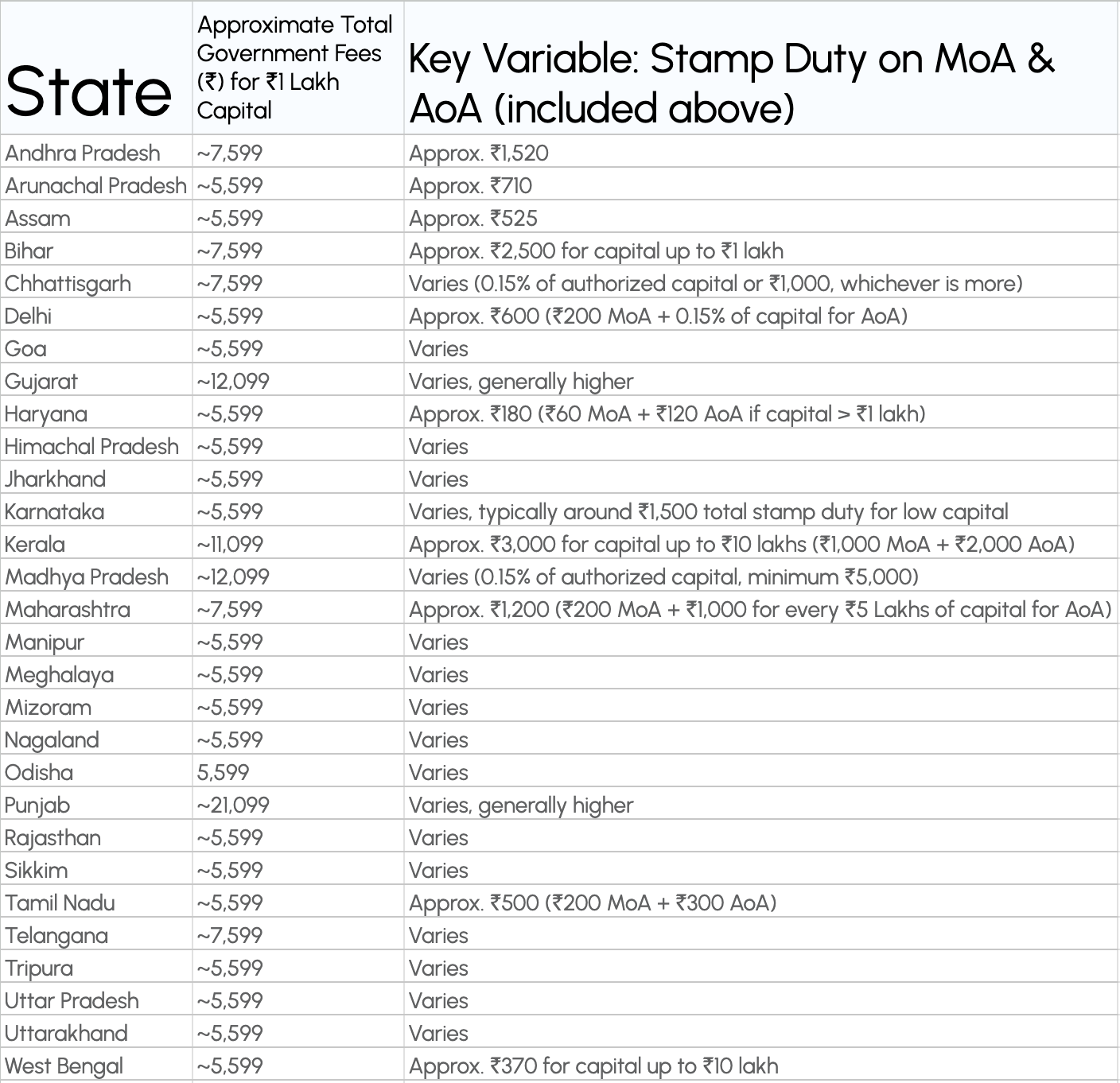
Government fees for Private Limited Company registration vary from state to state and are primarily based on the company’s authorised capital. Additional charges may apply depending on stamp duty, filing fees, and digital signature requirements as per the jurisdiction. The final cost may differ depending on state-specific regulations and updates issued by the Ministry of Corporate Affairs (MCA).
Click here to know more in detail: Pvt Ltd company registration fees
After registering your Private Limited Company, there are a few ongoing expenses you should plan for to keep your business fully compliant. These additional costs vary based on your operations, industry, and annual filing needs.

A private limited company stands out among various business structures in India due to its separate legal entity status, limited liability protection, and formal company registration process under the Companies Act, 2013, regulated by the Ministry of Corporate Affairs (MCA).

Estimated Completion Time
15-20 Days
Estimated Completion Time
8-10 Days
Estimated Completion Time
5-7 Days
The expected completion time given above for all packages does`not include the time taken by the government for approvals.
Company name reservation is free for the first time. Applying again would be chargable.
Get 10% Flat OFF on Trademark registration and GST Registration packages if you buy a premium package for private limited company registration